Strait of Hormuz Crisis: Economic Impact of US–Israel–Iran Conflict on Global Oil and Markets
Why the Strait of Hormuz Matters So Much to the Global Economy
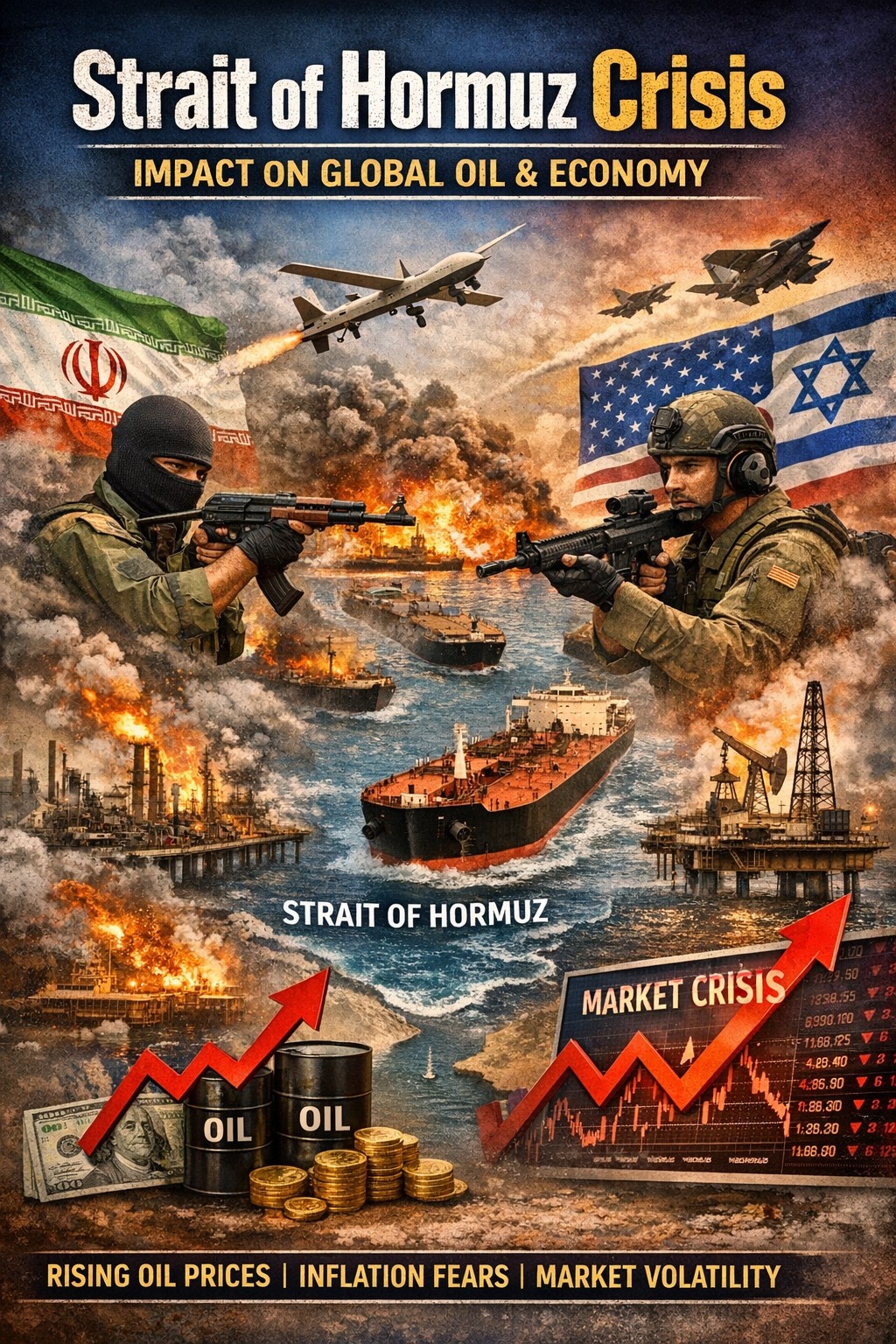
The Strait of Hormuz is a narrow waterway between the Persian Gulf and the Arabian Sea through which nearly 20 % of the world’s crude oil and liquefied natural gas (LNG) shipments pass daily. Every major energy exporter in the Gulf region — including Saudi Arabia, Kuwait, Iraq, UAE, Qatar, and Iran — depends on this corridor to send oil and gas to markets in Asia, Europe, and beyond. Any threat to this route immediately tightens global energy supply expectations and pushes oil prices higher.
Because modern economies are still heavily dependent on oil and gas as fuel and industrial inputs, even small disruptions in supply or expectations of disruption can ripple through inflation, transportation costs, industrial production, consumer prices, and global growth forecasts. Higher energy prices tend to:
- Increase inflation by raising costs of goods and service
- Slow economic growth as businesses and consumers cut spending
- Shift investor capital into safe assets like gold and bonds;
- Influence central banks’ monetary policies.
Why the Conflict Involving Israel, the US, and Iran Has Escalated
The current tensions have deep geopolitical roots, including decades of rivalry between Iran and Israel. Iran’s government has long supported groups opposed to Israel and Western influence in the region, and sanctions — mainly led by the United States — have targeted Iran’s oil exports and financial system for years.
Recent military escalation has involved:
- US and Israeli strikes on Iranian infrastructure and leadership targets
- Iranian retaliation with missiles and drones;
- Increasing direct and proxy engagements throughout the Gulf region.
The United States and many Middle Eastern governments (including Saudi Arabia and the Gulf Cooperation Council states) align against Iran due to concerns over Iran’s military ambitions, regional influence, and destabilizing actions. Saudi Arabia and other Gulf states see Iranian proxies and aggressive postures as threats to their own security, which strengthens their political ties with the US and Israel.
How Oil Markets React to the Conflict
Because Iran and its neighbours are major energy suppliers, markets watch any escalation closely:
- Threats to block or disrupt the Strait of Hormuz can instantly lift crude prices toward or above $100 per barrel on supply fears alone.
- Recent attacks on energy infrastructure and shipping have triggered spikes in gas and LNG prices across Europe and Asia.
- Oil price surges feed directly into inflation, especially for energy-importing countries like India or Japan.
This dynamic also affects financial markets: energy and defense stocks often outperform during heightened tensions, while broader equity markets may weaken due to inflation fears and rising production costs.
Winners and Losers in the Economic Landscape
Who Stands to Benefit?
- Oil and energy producers may see revenues rise with higher crude prices. Longer term, if the US continues increasing its own oil and LNG exports, US energy firms can gain market share as global supplies tighten.
- Defense sectors in major economies also tend to benefit from increased government spending on security.
Who Loses Out?
- Oil-importing countries — such as India or most of Europe — suffer higher energy costs, which can slow economic growth and raise inflation, straining budgets and reducing consumer purchasing power.
- Global markets can experience volatility and slowdown — a prolonged conflict could shave off significant global growth, raising fears of recession or “stagflation” (high inflation + slow growth).
- Iran’s economy itself has been hit hard: heavy infrastructure damage and steep drops in oil exports have cost the government billions in lost revenue.
Economic Outlook: Markets and the Future
In the short term, markets around the world have already reacted with volatility as oil prices spike and investors seek safer assets.
If the conflict continues:
- Oil prices could remain elevated or rise further
- Inflation pressures could endure, pushing central banks to delay interest rate cuts or even tighten further
- Equity markets may struggle with uncertainty and higher corporate costs
- Emerging and importing economies could face currency weakness and slower growth.
If the conflict cools:
- Oil markets may calm, reducing inflationary pressures
- Economic growth could stabilize
- Stock markets might recover lost ground
But the overarching lesson is clear: energy security and geopolitics remain deeply intertwined, and as long as the Middle East plays a central role in global oil supply, any instability there will reverberate across economies worldwide.