Indian Stock Market Under Pressure Amid Rising Oil Prices and Global War Tensions – Market Wrap-Up

India Market Wrap-Up – 12 March 2026
Indian equity markets ended the trading session in the red today as investors remained cautious due to global geopolitical tensions and rising crude oil prices. The ongoing conflict in the Middle East has created uncertainty in global financial markets, leading to increased volatility and risk-averse sentiment among investors.
Selling pressure was visible across several sectors including banking, metals, and auto stocks, while defensive sectors showed relatively better resilience.
Indian Stock Market Performance
Both benchmark indices closed lower during today’s trading session.
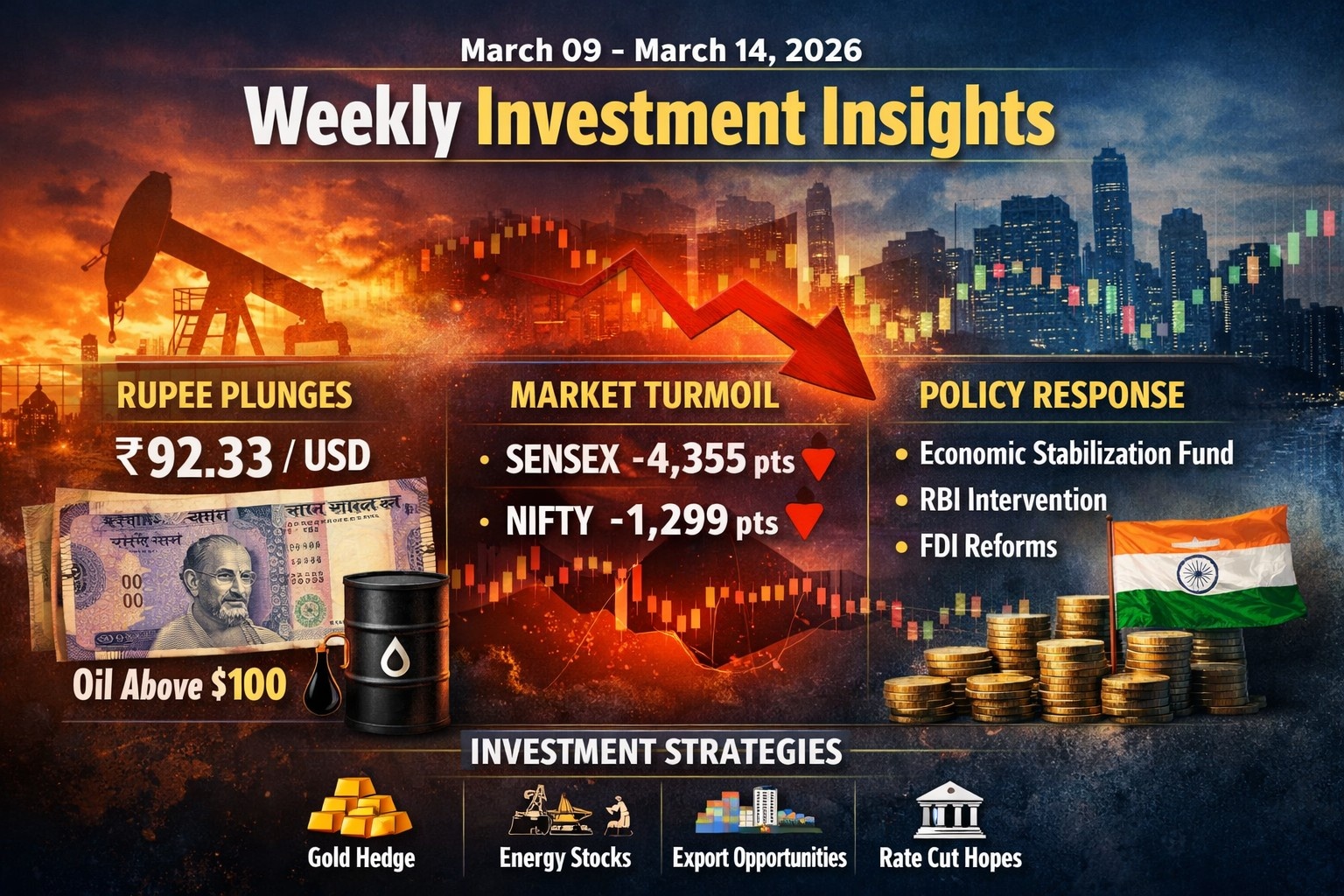
- BSE Sensex: 76,034.42 (Down 829 points | -1.08%)
- Nifty 50: 23,639.15 (Down 228 points | -0.95%)
Broader markets also witnessed volatility with mid-cap and small-cap stocks facing selling pressure. The decline was largely driven by global uncertainties and rising commodity prices.
The Indian Rupee also weakened slightly against the US dollar due to higher crude oil prices and global risk-off sentiment.
Global War Situation and Market Impact
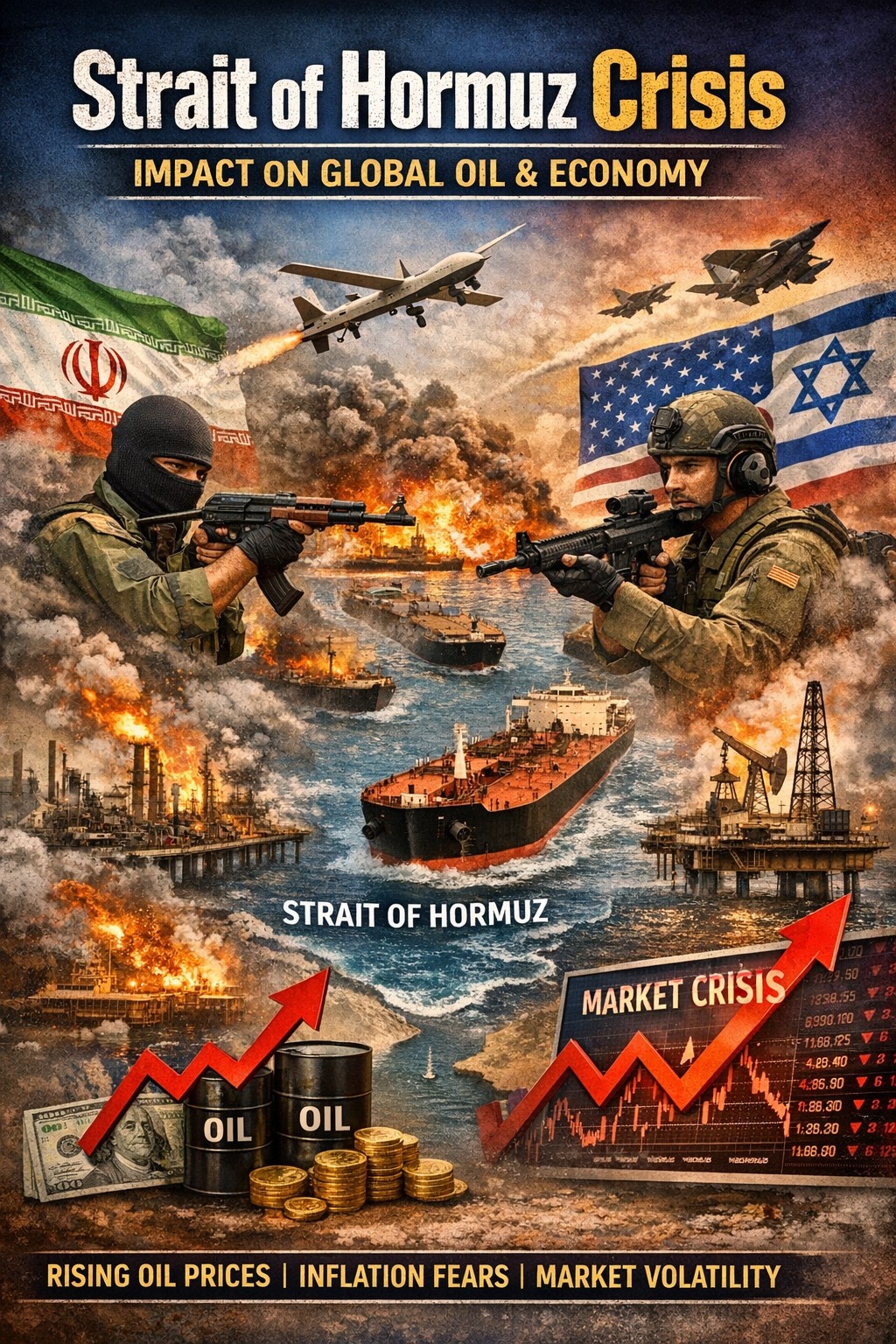
- Global financial markets remain on edge due to escalating tensions in the Middle East. The ongoing conflict involving major global powers and regional countries has increased fears of disruption in global trade and energy supply.
- One of the key concerns is the situation around the Strait of Hormuz, a strategically important shipping route through which nearly one-fifth of the world’s oil supply passes.
- Any disruption in this region can have significant consequences for global energy markets and international trade. As a result, investors across global markets are closely monitoring developments in the region.
Crude Oil Market Update
Crude oil prices have risen sharply due to fears of supply disruptions caused by geopolitical tensions.
- Brent Crude Oil: approximately $96–$100 per barrel
- WTI Crude Oil: around $92 per barrel
Higher crude oil prices have a direct impact on India as the country imports nearly 85% of its oil requirements.
The rise in oil prices may lead to:
- Increased inflation
- Higher transportation and logistics costs
- Pressure on the Indian rupee
- Increased government fiscal burden
- If oil prices remain elevated for a prolonged period, it may impact corporate profitability and economic growth.
Metal Market Update
- Metal markets remained volatile due to uncertainty in global demand and geopolitical risks.
- Industrial metals such as copper and aluminum witnessed mixed trends as investors remained cautious about global economic growth.
- However, gold prices remained strong as investors shifted toward safe-haven assets amid rising geopolitical tensions and market volatility.
- Gold often attracts strong demand during periods of global uncertainty as it acts as a hedge against economic instability.
- Impact on the Indian Economy
The ongoing geopolitical situation can have several implications for the Indian economy.
1. Rising Inflation
Higher crude oil prices increase fuel and transportation costs, which can push overall inflation higher.
2. Pressure on the Rupee
Higher oil imports increase the demand for US dollars, which can weaken the Indian currency.
3. Market Volatility
Foreign investors tend to reduce exposure to emerging markets during periods of global uncertainty, which can increase volatility in stock markets.
4. Sectoral Impact
Some sectors are more sensitive to rising oil prices.
Most affected sectors:
- Aviation
- Logistics
- Chemicals
- Paint companies
Relatively stable sectors:
- FMCG
- Pharmaceuticals
- Utilities
Mutual Fund Industry Update
- Despite market volatility, retail participation in mutual funds remains strong.
- Systematic Investment Plans (SIPs) continue to be a stable source of inflows into the market. Long-term investors are maintaining their investment discipline despite short-term fluctuations.
- Market corrections often provide opportunities for investors to accumulate quality assets at more attractive valuations.
- Gold ETFs and commodity funds are also seeing growing interest from investors looking to diversify their portfolios and hedge against global uncertainty.
Wealth Management Strategy During Market Volatility
Periods of geopolitical uncertainty require a disciplined and balanced investment approach.
- Avoid Panic Selling - Market volatility caused by geopolitical events is often temporary. Investors should avoid making emotional investment decisions.
- Continue SIP Investments - Continuing SIPs during volatile markets helps investors benefit from rupee-cost averaging.
- Maintain Diversification - A well-balanced portfolio should include - Equity investments, Debt funds , Gold exposure, International investments
- Focus on Quality Assets - Investors should prioritize companies and funds with strong fundamentals and long-term growth potential.
- Keep Liquidity for Opportunities - Market corrections often create opportunities to invest in fundamentally strong companies at attractive valuations.
Key Takeaways
- Indian markets closed lower due to global geopolitical tensions and rising crude oil prices.
- Sensex fell 829 points while Nifty dropped below 23,650.
- Rising crude oil prices could increase inflation and put pressure on the Indian economy.
- Investors should remain focused on long-term goals and avoid reacting to short-term market volatility.
- Diversification and disciplined investing remain the key strategies during uncertain market conditions.