Market Volatility, Rupee Fall & Policy Boost: Weekly Investment Insights (March 2026)
Introduction
The week of March 9–14, 2026 was one of the most volatile periods for global and Indian markets in recent times. Rising geopolitical tensions in West Asia, sharp movements in crude oil prices, and a sudden fall in the Indian rupee created pressure across financial markets.
Despite these challenges, India’s strong macroeconomic fundamentals and timely policy responses helped stabilise the situation. Government measures, central bank flexibility, and fiscal support indicate that India remains resilient even during global disruptions.
For investors and wealth managers, the key takeaway is clear: volatility may continue in the short term, but India’s long-term investment outlook remains strong.
Rupee Weakness: Rising Oil Prices Impact Currency
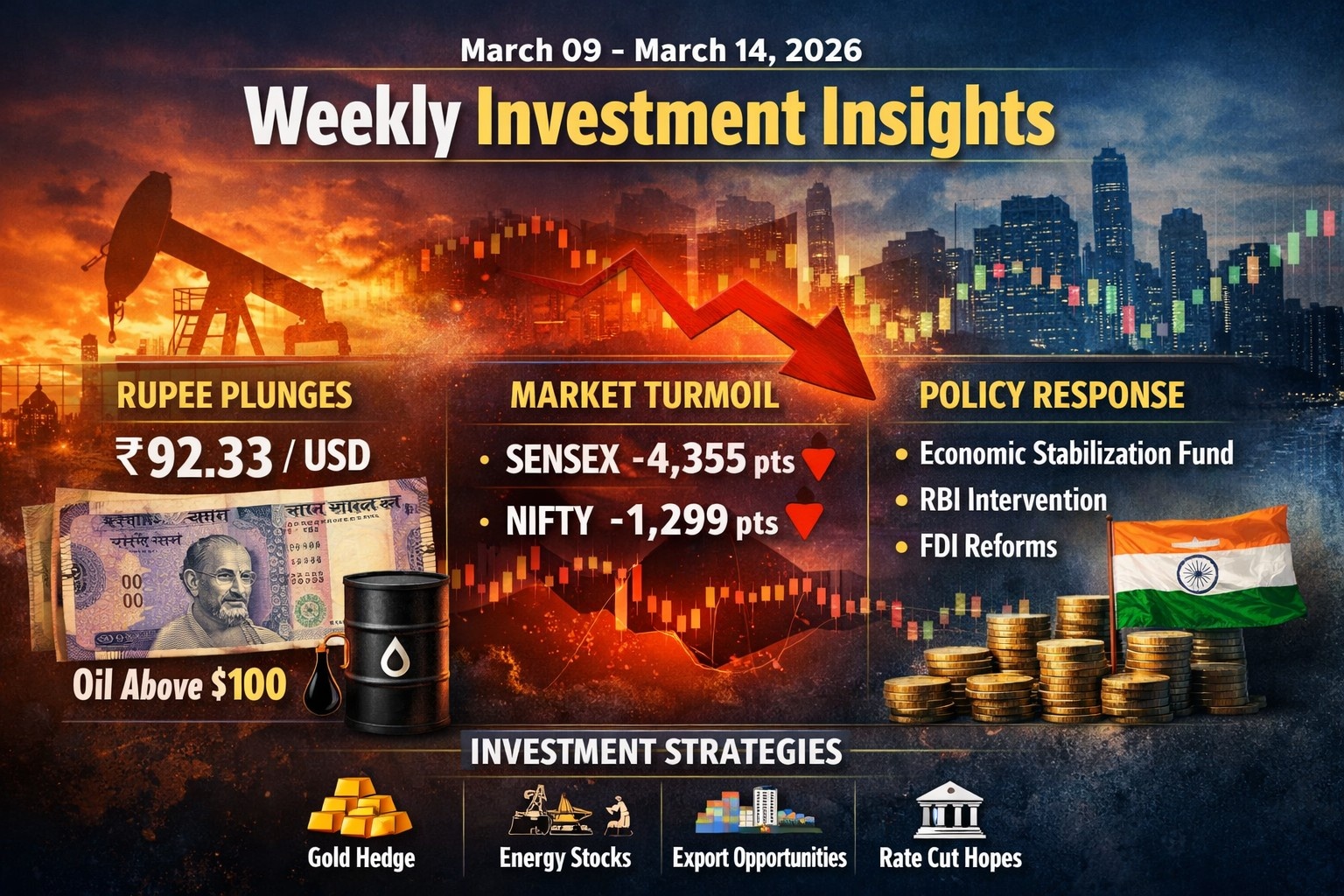
During the week, the Indian rupee fell to a record low of ₹92.33 per US dollar. The primary trigger was the surge in global crude oil prices, which crossed $100 per barrel due to fears of disruption in oil supply routes.
India imports nearly 88% of its crude oil, making the economy sensitive to oil price fluctuations.
Impact on Markets
- Higher oil prices increase the current account deficit
- Import-heavy industries face cost pressure
- Inflation risks increase if oil prices remain elevated
Investment Perspective
Some sectors benefit from a weaker rupee:
Positive Impact
- IT Services
- Export-oriented sectors
- Gems & jewellery exporters
Negative Impact
- Airlines
- Oil marketing companies
- Chemical manufacturers
- Currency volatility is expected to remain high if oil prices stay above $90 per barrel.
- Equity Market Correction: Temporary Shock, Not Structural Damage
- Indian stock markets experienced a sharp correction during the week.
Weekly Market Performance
- Sensex: Fell around 4,355 points (-5.5%)
- Nifty 50: Dropped nearly 1,299 points (-5.3%)
- Market Capitalisation Loss: Approximately ₹19 lakh crore
The correction was largely triggered by global uncertainty and foreign investor selling.
|
Sector |
Weekly Movement |
Reason |
|---|---|---|
|
Auto |
10.6% |
Rising fuel costs |
|
Banking |
7% |
Funding cost concerns |
|
Defence |
7% |
Profit booking |
|
Energy |
6.5% |
Refinery margin pressure |
|
IT |
Stable |
Benefiting from weaker rupee |
Institutional Activity
- Foreign investors sold: ₹21,831 crore
- Domestic institutions bought: ₹32,787 crore
Domestic investors helped cushion the market decline.
Investor Insight - The correction may offer long-term buying opportunities in quality companies, especially in sectors focused on domestic demand.
Export Disruptions & Freight Cost Surge
- Due to geopolitical tensions, global shipping costs surged significantly.
- Exporters reported war-risk surcharges up to $4,000 per container, creating pressure on margins for Indian exporters.
- The government stepped in by directing shipping companies to avoid non-transparent and opportunistic charges.
Sectors Most Impacted
- Textiles
- Rice exporters
- Engineering goods
- Gems and jewellery
Small and medium exporters are expected to face the biggest short-term challenges.
Pharma Sector Faces API Supply Shock - The pharmaceutical sector experienced supply disruptions in Active Pharmaceutical Ingredients (APIs).
Prices surged sharply:
- Glycerine: +64%
- Paracetamol API: +26%
- Pharmaceutical solvents: +20–30%
The disruptions are largely due to shipping delays and dependence on imports from China.
Long-Term Opportunity
This situation strengthens the case for domestic API manufacturing, which could benefit Indian pharma companies participating in government production incentive schemes.
Inflation Remains Under Control
India’s Consumer Price Index (CPI) inflation stood at 3.21% in February 2026, below the Reserve Bank of India’s 4% target.
Key Highlights
- Rural inflation: 3.37%
- Urban inflation: 3.02%
- Food inflation: 3.47%
Despite rising commodity prices globally, inflation remains relatively controlled.
What This Means - The RBI still has room to reduce interest rates if economic growth slows.
Analysts expect:
- Possible 25 basis point rate cut
- Additional easing later in the year if inflation remains stable
- Rate cuts would benefit sectors like:
- Real estate
- Infrastructure
- Consumer durables
- NBFCs
Government Launches Economic Stabilisation Fund
To support the economy during global disruptions, the government introduced a ₹1 lakh crore Economic Stabilisation Fund.
The fund is part of supplementary expenditure proposals totaling ₹2.81 lakh crore.
Key Allocations
- MGNREGA: ₹30,000 crore
- Fertiliser subsidies: ₹15,000 crore
- Food subsidies: ₹23,640 crore
Why This Matters
The fund gives the government flexibility to respond quickly to economic shocks without disrupting the fiscal deficit targets.
Policy Reform: Relaxation in Press Note 3
The government has relaxed Press Note 3 investment rules, allowing certain investments from neighbouring countries with less than 10% ownership to enter through the automatic route.
Potential Beneficiaries
- Electronics manufacturing
- Semiconductor ecosystem
- Electric vehicle components
- Renewable energy supply chains
The reform could attract more foreign capital into India’s manufacturing sector.
Global Trade Risks: New US Tariff Investigation
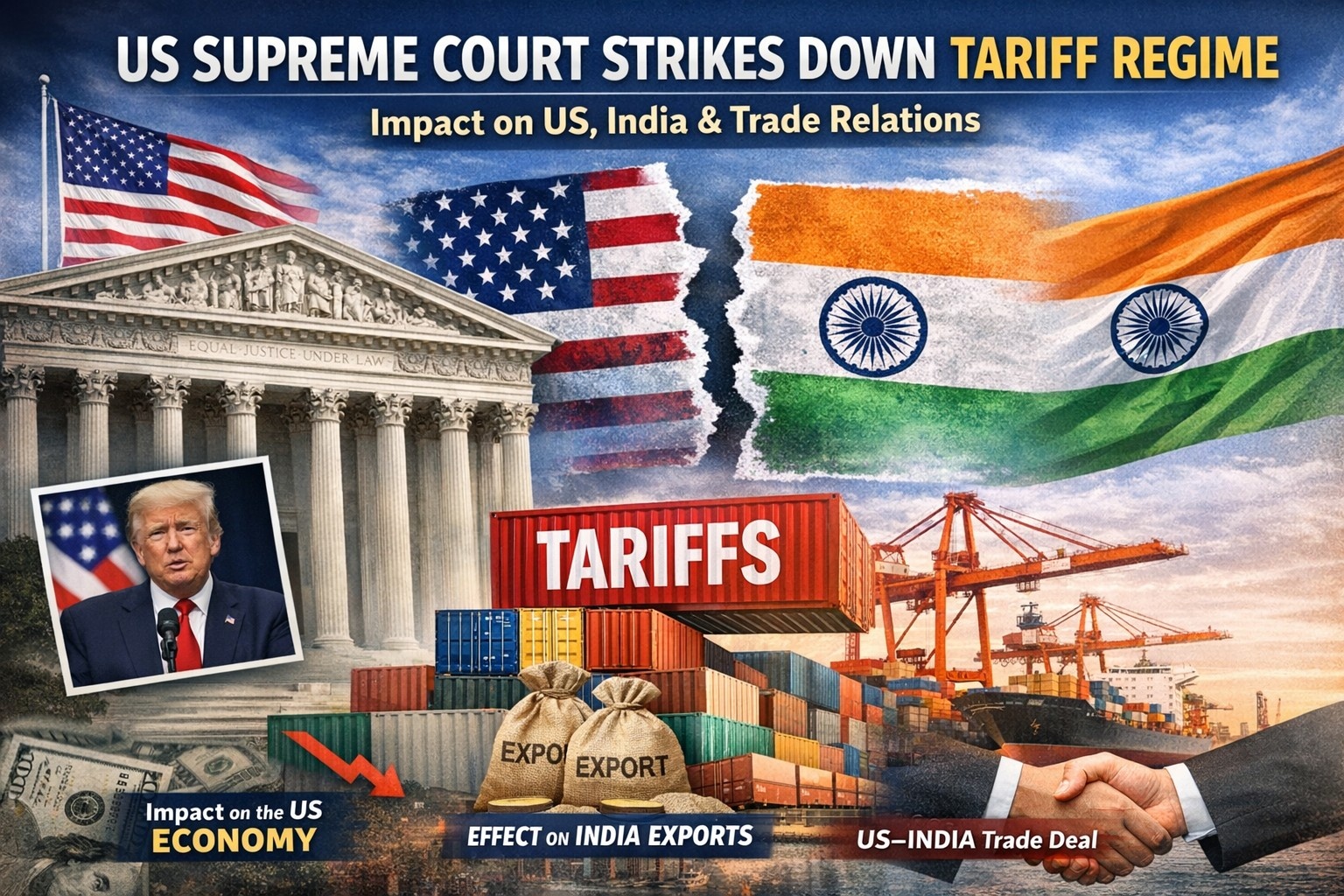
The United States has launched a Section 301 investigation into several major economies, including India.
The investigation could potentially lead to higher tariffs on imported goods.
Sectors That Could Be Impacted
- Steel
- Aluminium
- Chemicals
- Textiles
Companies with high exposure to US exports may face uncertainty if tariffs increase later in 2026.
IPO Market Pauses Amid Volatility
Due to global uncertainty and declining market sentiment, India’s IPO market has slowed.
Currently:
- 141 companies have IPO approvals
- Potential fundraising size: ₹1.64 lakh crore
Many companies are delaying launches until market conditions stabilise.
For investors, this may create pre-IPO investment opportunities at more attractive valuations.
What Investors Should Watch This Week
1)Key developments to monitor in the coming days:OPEC+ Meeting (March 17–18)
2)May determine future crude oil supply and prices.
- Shipping Routes Near Strait of Hormuz
- Any disruptions could affect global energy markets.
3)SEBI Derivatives Framework Announcement - Important for derivatives traders and market liquidity.
4)IPO Market Activity - Companies approaching approval expiry may announce launches.
5)Conclusion: Volatility Creates Opportunity
While geopolitical tensions and rising oil prices triggered market volatility, India’s economic fundamentals remain strong.
Key strengths include:
- Controlled inflation
- Policy flexibility
- Strong domestic demand
- Government support measures
For long-term investors, periods of uncertainty often create opportunities to accumulate high-quality assets at better valuations.
Maintaining diversification, focusing on strong fundamentals, and staying invested remain the best strategies during volatile market phases.