Daily Market Wrap: Sensex and Nifty Fall Amid Middle East Tensions and Rising Oil Prices
Market Performance
Indian equity markets ended the session on a negative note, as investors remained cautious due to global geopolitical developments and rising crude oil prices.
- BSE Sensex: 78,918.90 (down 1,097.90 points, −1.37%)
- Nifty 50: 24,450.45 (down 315.45 points, −1.27%)
- Nifty Midcap 100: declined around 0.6%
- Nifty Smallcap 100: marginally lower
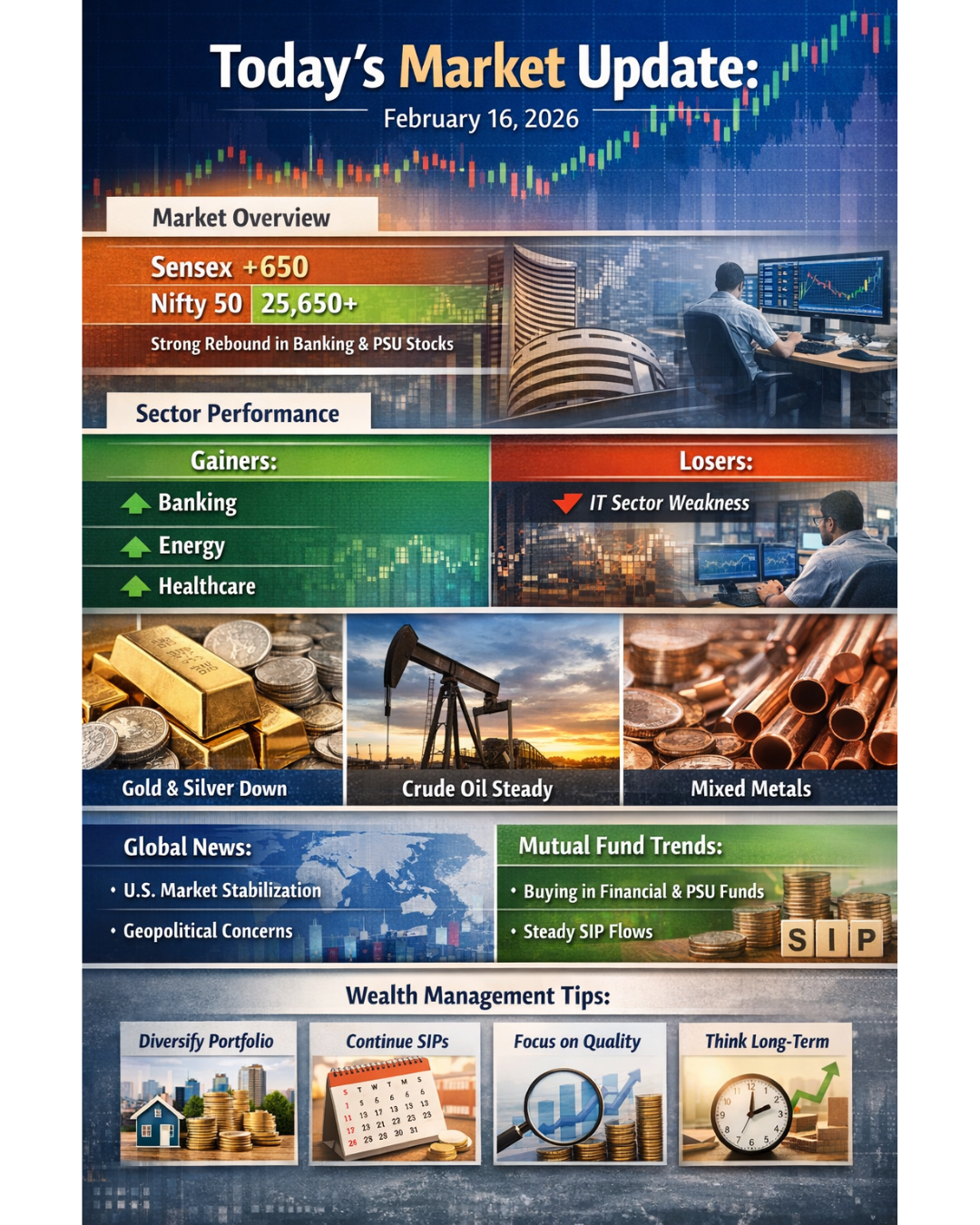
Most sectoral indices closed in the red, with banking, financial services, and IT stocks witnessing selling pressure, while some energy and defensive stocks showed relative resilience.
Market Volatility
Market volatility increased during the session as investors reacted to geopolitical developments and global economic uncertainty.
India VIX: rose to around 18.7, indicating increased risk perception among market participants.
The rise in volatility reflects investor concerns regarding global conflicts, rising oil prices, and uncertainty surrounding global monetary policy.
Key Reasons Behind Market Movement
1)Geopolitical Tensions in the Middle East
One of the major drivers of market sentiment continues to be escalating tensions involving the United States, Israel, and Iran. The geopolitical situation has raised fears of disruptions in energy supply routes through the Strait of Hormuz, a critical maritime corridor through which nearly one-fifth of the world’s oil supply passes.
Any disruption in this region could significantly impact global energy markets and increase inflationary pressures worldwide.
2)Crude Oil Price Surge
Crude oil prices have risen due to concerns about supply disruptions in the Middle East.
Brent Crude: approximately $87–88 per barrel
Higher oil prices are generally negative for oil-importing countries like India as they increase the import bill, widen the current account deficit, and add pressure on inflation.
Foreign Institutional Investor Outflows
Foreign Institutional Investors continued to remain cautious and reduced exposure to Indian equities amid global uncertainty. Continued selling by foreign investors added pressure to benchmark indices.
However, domestic institutional investors and retail participation helped limit deeper market declines.
Commodity Market Update
- Oil Brent crude prices remained elevated around $87–88 per barrel, supported by geopolitical risk premiums related to tensions in the Gulf region.
- Gold Gold prices remained relatively stable as investors balanced safe-haven demand with expectations regarding global interest rates.
- Metals Metal prices showed mixed trends. While global demand expectations supported certain metals, concerns about slower global growth kept gains limited.
Gulf of Hormuz Situation
- The Strait of Hormuz remains a critical point of concern for global markets. The waterway connects the Persian Gulf to global shipping routes and carries a large portion of the world's oil and liquefied natural gas shipments.
- Heightened military activity in the region has increased the risk premium in energy markets. Any prolonged disruption in shipping activity could lead to higher oil prices and increased global inflation.
- For India, which imports a significant share of its crude oil from the Middle East, developments in this region are closely monitored due to their potential impact on energy costs and economic stability.
Macro Economic Developments in India
Strong GDP Growth Outlook
India continues to remain one of the fastest-growing major economies globally. Recent economic indicators suggest continued momentum supported by strong domestic consumption, infrastructure spending, and manufacturing expansion.
Government Infrastructure Push
- The government's continued focus on infrastructure investment, manufacturing growth, and capital expenditure remains a key driver of economic activity. Large-scale projects in transportation, energy, and logistics are expected to support long-term economic growth.
- Inflation and Monetary Policy
- Inflation trends remain an important factor for markets. Rising oil prices may create short-term inflationary pressures, which could influence future policy decisions by the Reserve Bank of India.
Micro Economic and Corporate Developments
Several sectors are witnessing structural transformation:
- Technology sector: Continued focus on artificial intelligence and digital transformation is reshaping business models and creating new opportunities.
- Manufacturing sector: Government initiatives supporting domestic production are strengthening industrial growth
- Energy sector: Increasing investments in renewable energy and energy transition projects are shaping long-term market opportunities.
- Corporate earnings growth across sectors remains an important factor supporting investor confidence over the medium term.
Mutual Fund Industry Updates
The mutual fund industry continues to witness strong participation from retail investors.
Key trends include:
- Continued strong inflows through Systematic Investment Plans (SIPs)
- Increased allocation toward large-cap and diversified equity funds
- Growing interest in hybrid and gold funds during periods of market volatility
- Domestic institutional investors and mutual funds continue to play a stabilizing role in the Indian equity market during phases of foreign investor outflows.
Wealth Management Insights
The current market environment highlights the importance of disciplined wealth management strategies.
Key focus areas include:
- Maintaining diversified portfolios across equity, debt, and alternative assets
- Gradually increasing exposure during market corrections
- Focusing on long-term structural themes such as technology, infrastructure, manufacturing, and energy transition
- Investors are advised to remain focused on long-term financial goals rather than reacting to short-term market volatility.
Outlook
Markets are expected to remain volatile in the near term due to geopolitical tensions and fluctuations in crude oil prices. However, India’s strong domestic growth fundamentals, stable financial system, and rising retail participation continue to provide long-term support to equity markets.
For long-term investors, market corrections can create opportunities to build positions in fundamentally strong companies and diversified investment portfolios.